Short answer: yes, Slovenia is one of Europe’s best gravel cycling destinations, and one of the least crowded. Its strength is variety: in a single week you can ride from the Julian Alps through forest plateaus and limestone karst, across two wine regions and down to the Adriatic coast. Tuscany wins on iconic white roads and Girona wins on year-round weather, but from late May to September Slovenia offers more change of scenery per mile than either.
We ride all three, and each is a great place to own a gravel bike. Here is how they actually differ once you are on the road.
Slovenia vs Tuscany vs Girona at a glance
| Slovenia | Tuscany | Girona | |
|---|---|---|---|
| Terrain | Alps, forest plateaus, karst, wine hills, coast | Rolling white gravel roads (strade bianche), vineyards, hill towns | Volcanic hills, forest tracks, coastal ranges |
| Best months | Late May to September | April to June, September to October | Most of the year, especially autumn to spring |
| Crowds | Light outside a few famous lakes | Busy in peak season | Busy with resident and visiting cyclists |
| Food and wine | Karst and Vipava wines, Brda whites, cured ham, alpine cheese | World-famous Chianti and Tuscan cooking | Catalan cuisine and Empordà wines |
| Signature ride | Crossing the Alps and finishing at the Adriatic | The white roads of Chianti and the Val d’Orcia | Hill loops from a single base |
Why Slovenia works so well for gravel
Variety in a small country
Slovenia is roughly the size of New Jersey, yet it spans high alpine terrain, the Pannonian lowlands, the limestone Karst that gave its name to karst landscapes worldwide, and a short Adriatic coastline. A point-to-point gravel tour can feel like three trips in one. Our Epic Slovenian Gravel Roads route goes from the capital to the sea in six riding days; the Julian Alps & Soča Valley route stays high and ends in wine country.
Forest roads everywhere
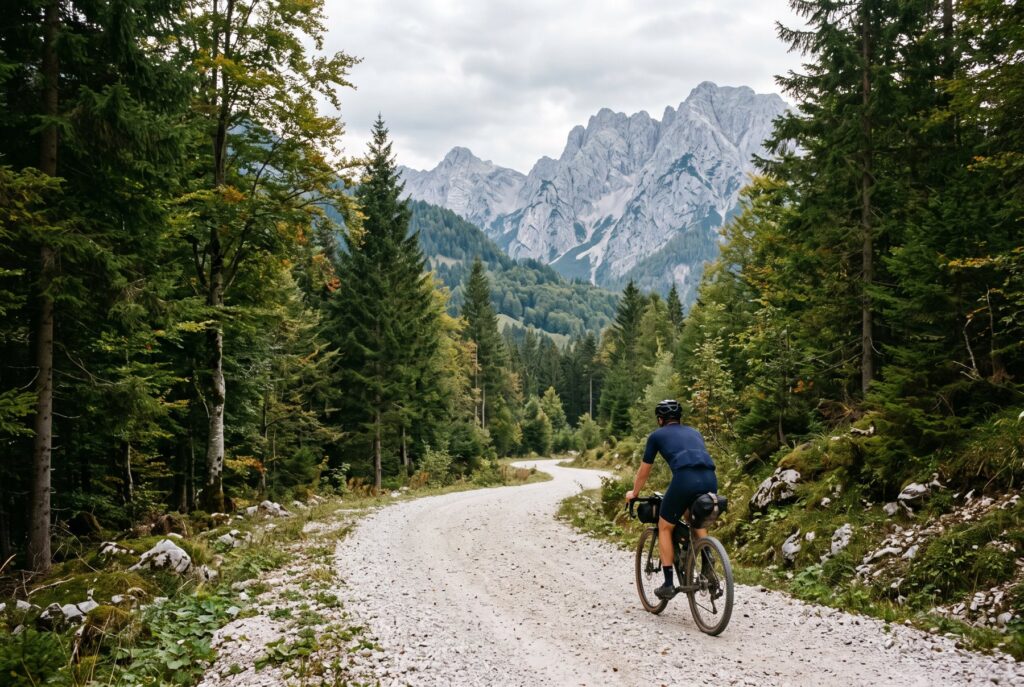
More than half of Slovenia is forest, and its plateaus are laced with well-graded forestry and farm roads. That means long stretches of shade in summer, very little traffic and gravel that is mostly smooth and fast rather than technical.
Quiet roads
Outside honeypots like Bled in high summer, you can ride for hours and meet only farm vehicles and other cyclists. It still feels like a discovery, which is rare in European cycling.
Food and wine that hold their own
Slovenia’s western wine regions sit right against Italy’s Collio, and the Karst is famous for its red teran and air-dried pršut. Read more in our guide to riding Slovenia’s wine country.
When Tuscany is the better pick
If your bucket list is the white roads themselves, Tuscany is the original. The strade bianche of Chianti, the Crete Senesi and the Val d’Orcia are iconic, and the retro L’Eroica ride from Gaiole in Chianti each October is a pilgrimage for many riders. Expect more tourists in peak season and terrain that is rolling rather than alpine.
When Girona is the better pick
Girona, in Catalonia, has long been a base for professional cyclists, with excellent bike shops, cafés and gravel in the surrounding hills. Its mild climate makes it a strong choice from autumn through spring, when Slovenia’s mountains are under snow. It is best enjoyed as a base for loops rather than a point-to-point journey.
Who Slovenia suits best
- Riders who want a journey from one place to another, not daily loops from one hotel
- Anyone who likes mountains but does not want every day to be a big climb
- Groups of friends or clubs looking for somewhere their members have not ridden yet
- Food and wine lovers who would rather discover a region than queue for one
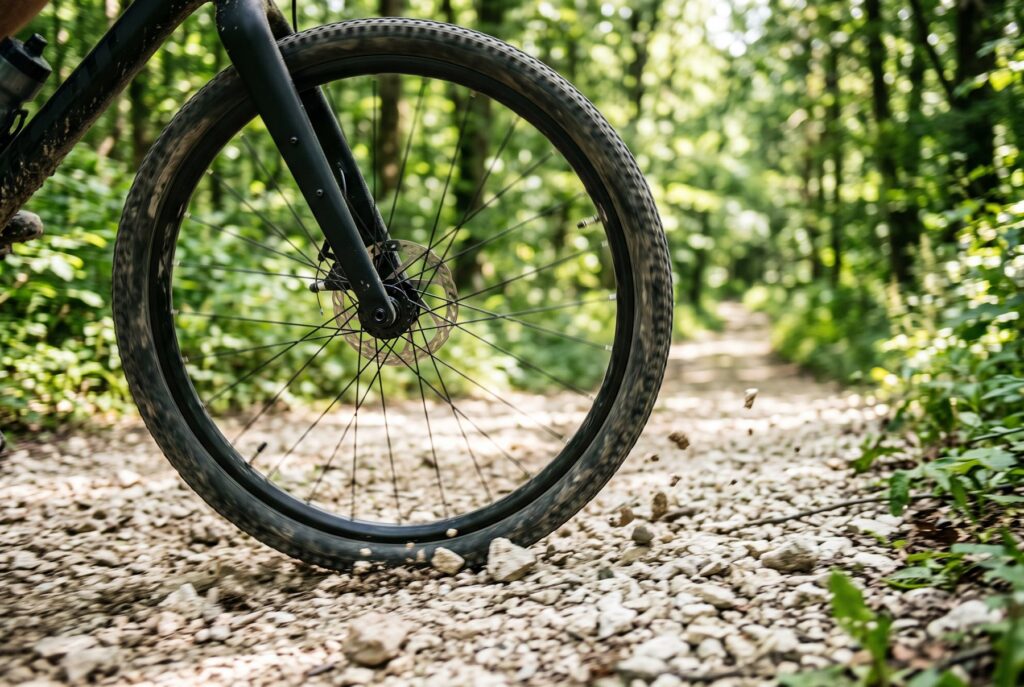
Timing matters a lot in Slovenia, so see our month-by-month guide before you pick dates.
Frequently asked questions
Is Slovenia good for gravel cycling?
Yes. Slovenia combines a huge network of forest and farm roads with quiet tarmac, and in one week you can ride through the Julian Alps, karst plateaus, wine regions and down to the Adriatic. It is far less crowded than the established gravel hubs.
Is Slovenia better than Tuscany for gravel riding?
It depends what you want. Tuscany has the iconic white roads of Chianti and the Val d’Orcia and a famous food culture. Slovenia offers more landscape variety in a short trip, much more forest riding and quieter roads, with excellent food and wine of its own.
When is Girona a better choice than Slovenia?
In winter and early spring. Girona’s mild Mediterranean climate makes it rideable for much of the year, while Slovenia’s mountains are snowbound in winter. From late May to September, Slovenia is at its best.
Do I need a lot of experience to ride gravel in Slovenia?
You need to be a regular rider who is comfortable on loose surfaces and consecutive long days. The roads are mostly well-graded forest and farm tracks rather than technical singletrack.