Short answer: western Slovenia has three wine regions that link together beautifully by bike. The Vipava Valley is known for crisp native whites like zelen and pinela, Goriška Brda for its rebula and hilltop villages on the Italian border, and the Karst for its red teran and air-dried pršut. Between them is a web of quiet lanes, farm tracks and forest gravel, and you can ride all three in two or three days.
The Vipava Valley
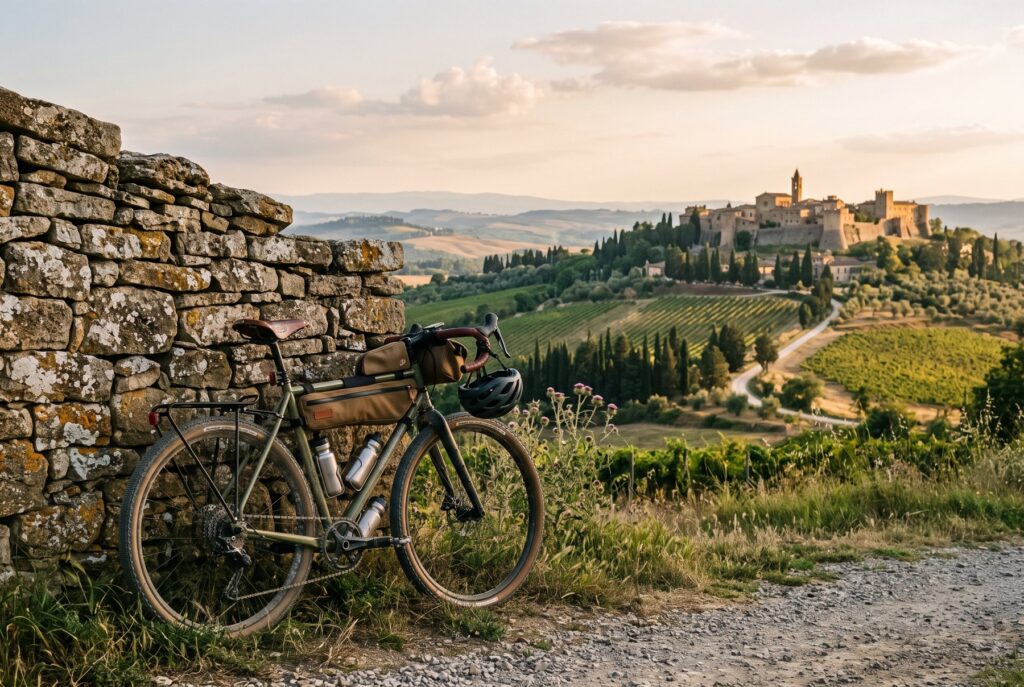
The Vipava Valley runs inland from the Italian border beneath the steep edge of the Nanos and Trnovo plateaus. It is famous for the bora (burja), a fierce wind that blasts down the valley in winter, and for the native white grapes that thrive in it: zelen, which is fresh and herbal, and pinela. On a bike, the valley floor is gentle and the side roads climb to small villages perched above the vineyards, such as Vipavski Križ.
How we ride it: on our Epic Slovenian Gravel Roads trip, day 4 crosses the forested Nanos Plateau on gravel and drops into the valley, with an ice cream stop in the town of Vipava. Day 5 follows the Vipava River west past Vipavski Križ toward Nova Gorica.
Goriška Brda
Brda is a tight knot of steep vineyard hills on the border, continuing straight into Italy’s Collio. It is often compared to Tuscany for its cypress trees and stone towers, but it is smaller and quieter. The signature grape is rebula (ribolla gialla in Italy), made in everything from fresh, bright styles to long-macerated amber wines. Brda is also cherry country, with the harvest in late May and June.
The fortified village of Šmartno is the jewel, a ring of stone houses on a hilltop. Expect short, punchy climbs between villages and big views to the Julian Alps on a clear day. Both of our routes pass through Brda: the Epic trip spends a night here, and the Julian Alps & Soča Valley trip finishes here with a glass of local wine.
The Karst
The Karst plateau above Trieste is a landscape of limestone, red soil, pine woods and stone villages. The red soil gives teran, a deep-colored, high-acid red from the refošk grape, and the dry bora wind is what cures the region’s famous pršut ham. Look for an osmica, a pop-up farm tavern where a family sells its own wine and food for a few days at a time, a tradition dating back to the 18th century.
The stone village of Štanjel is a highlight. On our Epic route, day 6 climbs from Gorizia onto the Karst Plateau and rides gravel tracks through pine forest and vineyards to Štanjel and on to Sežana.
What to eat and drink along the way
- Rebula from Brda, fresh or as an orange wine
- Zelen and pinela, native whites from the Vipava Valley
- Teran, the Karst’s signature red
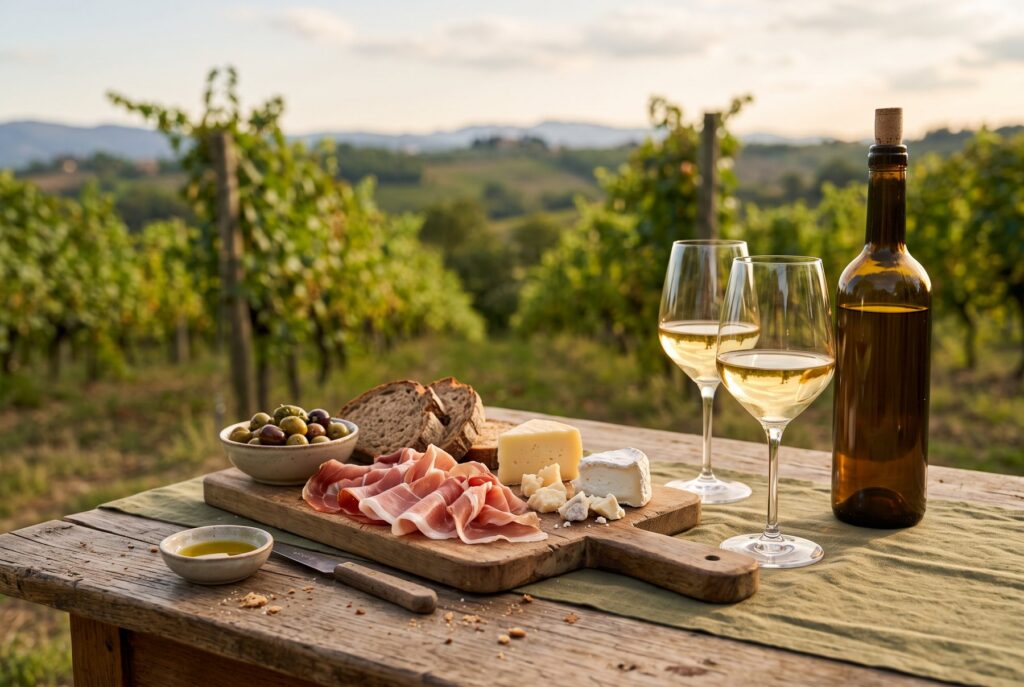
- Pršut, air-dried Karst ham, with local cheese and olive oil
- Cherries in Brda if you ride in late May or June
Tips for riding wine country
- Taste at the end of the day, not before the last climb.
- Brda’s climbs are short but steep; keep a low gear handy.
- The bora can be strong in the Vipava Valley; check the forecast and plan your direction.
- Most wineries prefer a call or booking ahead, so it helps to ride with someone local.
Late May and September are ideal here, with September adding the grape harvest. See our month-by-month guide for more.
Frequently asked questions
What are the wine regions of western Slovenia?
The Primorska region includes Goriška Brda, the Vipava Valley, the Karst and Slovenian Istria. Brda is known for white rebula, Vipava for the native zelen and pinela grapes, and the Karst for the red teran.
What is an osmica?
An osmica is a traditional pop-up farm tavern in the Karst, where a family opens its home for a few days to sell its own wine, cured meats and cheese. The custom dates back to an 18th-century Habsburg decree.
Is Goriška Brda good for cycling?
Yes. Its small roads and farm tracks wind over vineyard hills between stone villages such as Šmartno, right on the Italian border. The climbs are short but frequent.
Can you combine wine tasting and gravel riding?
Yes, and it is one of the best parts of riding here. Save the tasting for the end of the day, stay well hydrated, and let the support van carry anything you buy.