Short answer: the best time to go gravel cycling in Slovenia is late May through June, and again in September. Those months give you mild riding temperatures, long days, open mountain roads and far fewer crowds than July and August. Spring suits the karst and wine country; early summer is the window for the high Alps; September brings settled weather and the start of the grape harvest.
Slovenia packs Alpine peaks, limestone plateaus, wine hills and a stretch of Adriatic coast into a country you can cross in a few hours by car. That variety is the whole appeal for gravel riders, but it also means the “best” month depends on where you want to ride. Temperatures below are long-term averages for Ljubljana; the mountains run cooler and the coast runs warmer.
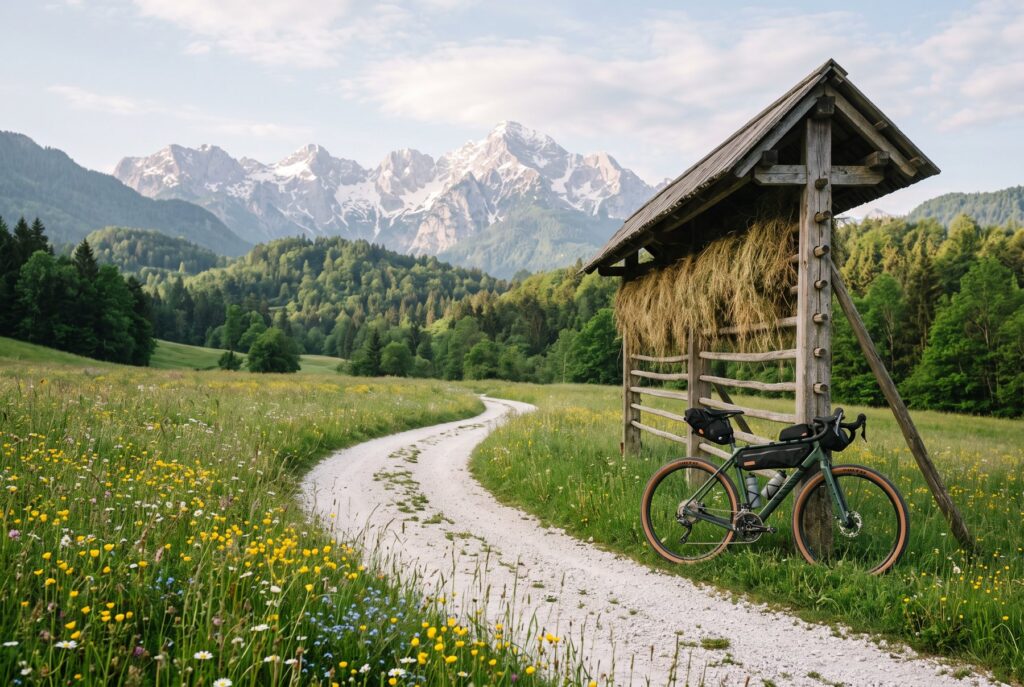
Slovenia gravel cycling, month by month
March and April: early season on the karst and coast
Lowland and coastal routes start to come alive, and the Karst and Slovenian Istria can be lovely on a dry day. Higher forest roads are often muddy and the Alps still hold plenty of snow. Good for a short, flexible trip; not the time for a point-to-point tour through the mountains.
May: green, quiet and ideal for the lower routes
Average highs in Ljubljana sit around 22°C (72°F). The meadows are at their greenest, rivers are full and the tourist season has not really begun. It is a superb month for the marshes south of Ljubljana, the Vipava Valley, Goriška Brda and the Karst. High passes can still be snowbound early in the month, so alpine routes are less predictable. Our Epic Slovenian Gravel Roads trip runs May 22 to 29, 2027, from Ljubljana to Piran for exactly this reason.
June: the window for the Julian Alps
June is arguably the best all-round month. Days are at their longest, highs average around 26°C (78°F) in the capital, and the mountain roads are normally clear of snow. Afternoon storms do build in the Alps, so the rhythm is an early start and a relaxed afternoon. Our Julian Alps & Soča Valley trip runs June 9 to 17, 2027, crossing Vršič Pass when it is at its best.
July and August: peak summer
Highs average around 28°C (82°F), and the famous spots such as Bled, Bohinj and the Soča Valley are at their busiest. Gravel riding is still very good, especially in the shade of the big forest plateaus, but plan to ride early, carry more water and keep an eye on thunderstorms in the mountains.
September: the insider’s choice
Temperatures drop back to the low 20s°C (low 70s°F), the crowds thin out and the weather is often settled for days at a time. The grape harvest starts in the western wine regions, and the Adriatic is usually still warm enough for a swim at the finish. Our second Epic Slovenian Gravel Roads departure runs September 8 to 15, 2027.
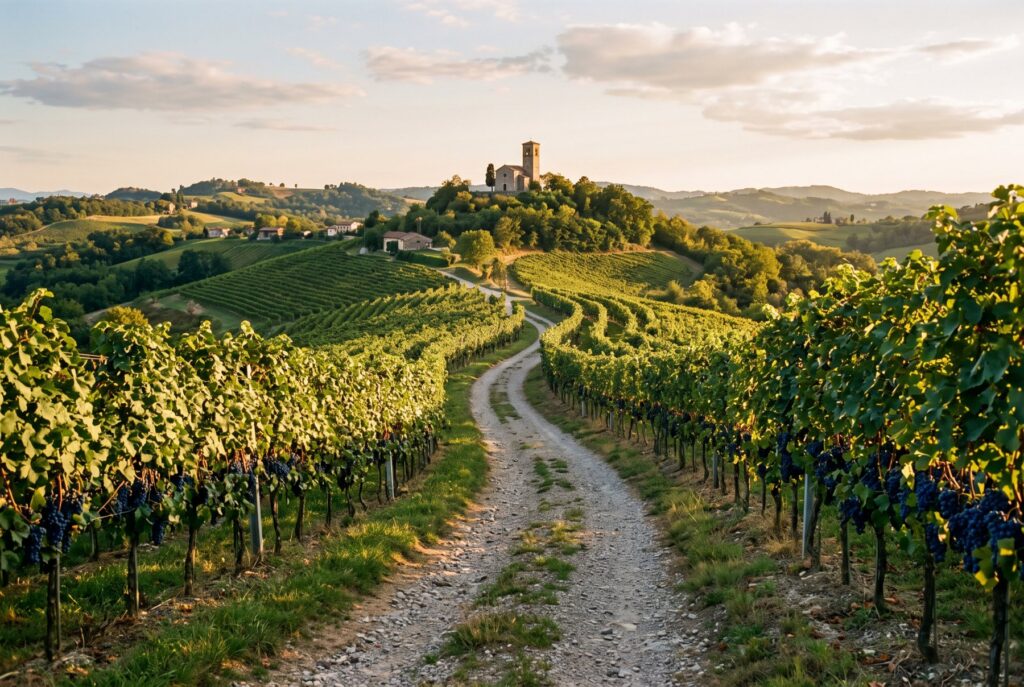
October: autumn color, shorter days
Beech forests turn gold and the wine country is beautiful, but days are shorter, highs fall to around 16°C (60°F) and rain becomes more frequent. October rewards flexible riders, especially on the Karst and in Goriška Brda.
November to February: off season
Snow in the mountains, short days and damp forest roads. Some coastal riding is possible, but this is not gravel touring season.
What about rain?
Slovenia is green for a reason. Rain is spread fairly evenly through the riding season, with around 11 to 13 days of some rain a month in Ljubljana, and many of those are short summer showers rather than all-day washouts. Mountain weather changes quickly, which is why every one of our stages has lower alternatives and a support van close by.
So when should you go?
- Want the high mountains and big alpine scenery? Go in June.
- Want wine country, the karst and a swim in the sea? Go in late May or September.
- Want the quietest roads and settled weather? Go in September.
- Only free in July or August? Go anyway, ride early and choose shaded forest routes.
If you are weighing Slovenia against better-known gravel destinations, our comparison of Slovenia, Tuscany and Girona covers seasons there too.
Frequently asked questions
What is the best month to cycle in Slovenia?
For most riders, June and September. June has long days and open mountain passes; September has stable weather, quieter roads and the grape harvest starting in the wine regions. May is excellent for lower routes and the karst.
Is July or August too hot for gravel riding in Slovenia?
Not too hot, but it takes planning. Ljubljana averages highs around 28°C (82°F) in midsummer, and afternoon thunderstorms are common in the Alps. Early starts and higher, forested routes make summer riding very pleasant.
When do the mountain passes open?
High roads like Vršič Pass close or become unreliable in winter and can hold snow into spring. By June they are normally clear, which is why our Julian Alps trip runs in June.
Can you ride gravel in Slovenia in October?
Yes, especially on the karst and in the wine country, where autumn colors are superb. Days are shorter and cooler, around 16°C (60°F) in Ljubljana, and rain becomes more frequent, so build in flexibility.